Why is innovation more important than ever?
This is the question that opened up our recent Corporate Innovation in Action conference.
And as I said in my introduction to this event, answering this question leads us to an even more fundamental question: “why innovate?”
This has been a central question in my work with leaders of large organisations in the last decade. And when you boil it down to the essential I’ve only encountered three reasons:
Some leaders use innovation as a way to manage the risk of disruption of a business.
They leverage innovation to “play defense”.
Some leaders need innovation to achieve their growth goals, sometimes in new arenas beyond the core business.
They leverage innovation to “play offense”.
Some leaders introduce a test & learn approach in their organisation to find their way in a highly uncertain environment.
They make innovation their new “game plan” to lead in uncertainty.
Now is any of this still relevant today?
Well… Our economic climate seems as uncertain as it ever was and recent technology developments (e.g. in AI) are creating new risks and opportunities that might lead to the creative destruction of previously successful business models and the creation of new businesses and industries we can’t even start to imagine.
So, today more then ever, leaders of large organisations need to leverage innovation to:
• Manage the risk of disruption of their business(es),
• Deliver on growth ambition and targets,
• Adapt (test & learn) to a highly uncertain environment.
Why do you innovate in your organisation?
More posts on innovation

Too many organisations rely on an outdated view of partnerships, treating them as transactional rather than transformational.
It is a big blind spot in today’s world where growth opportunities lie in ecosystems, deliberately shaped networks of diverse actors that can solve problems no single organisation can crack alone.
In the seventh article of The Growth Blind Spot series, I explore the Partnership Blind Spot, and how to overcome it.

Most organisations get stuck in what we call the “Exploration Blind Spot”: focusing solely on their core business while missing growth opportunities that lie just beyond their comfort zone.
In the sixth article of the Growth Blind Spots series, I unpack the Exploration Blind Spot and what to do to overcome it.

In the second article of the Growth Blind Spots series, I explore why many strategic processes fail to create real impact, and how to break free from the trap of a too narrow or outdated strategy process in order to unlock long-term growth.

In the first article of the Growth Blind Spots series, I explore the ‘Purpose Blind Spot’, a common hurdle when organisations chase growth but lose sight of why they exist in the first place.
In the piece, I break down why purpose isn’t just a ‘nice to have’ but a vital driver of sustainable growth.

In this article, I share three enduring lessons on disruption based on the journey of one of Australian most iconic products, Melway:
1. The Customer Job Endures, But the Solution Evolves
2. It’s Always Hard for the Incumbent to React to Disruption
3. The Road to Obsolescence is a Slow Descent

In this article , I share five key insights drawn from Yuval Noah Harari’s latest book, Nexus; insights that every leader navigating the accelerating impact of AI on business and society should understand.

In this post I reflect on the most useful books - loosely connected to strategy and innovation - I read in 2024.
Below are the four books I referred the most to fellow practitioners, clients and friends.

During his latest visit to Australia, I took the opportunity to interview Greg Bernarda to shed some light on the up-ruption global movement he’s been leading.

BCG's latest research highlights a widening innovation readiness gap: never since they started producing this report has the priority of innovation been so high and the innovation readiness been so low!
Drawing from our Vibrance experiences across Australia and abroad in the last 24 months, I delve deeper into the underlying reasons behind this alarming trend.

In a large organisation, it is possible for corporate innovation to exist in isolation. Until an Executive pulls the plug one day out of frustration. Corporate innovation can only become sustainable when it’s no longer an isolated practice, and it has become a critical vehicle to deliver strategic growth objectives.
In this blogpost I want to highlight the key question that will guide you towards having innovation closely connected to the overall strategy of an organisation, and then propose a simple framework to clarify your innovation strategy.

Anyone involved in corporate innovation will face the challenge of “selling innovation” to the executive team and/or the Board of Directors. The question of the return on investment (ROI) of innovation just keeps popping up. And still no one seems to have cracked it yet.
Indeed, predicting the ROI of innovation can feel like threading a needle in the dark. But while pinpoint precision is out of our grasp, could there be a way to calculate a rough order of magnitude ROI of innovation?
In this article I want to shed light on two essential frameworks and two critical data points that could transform your perspective on innovation ROI.

In this post I reflect on the most useful books - loosely connected to strategy and innovation - I read in 2023.
Below are the four books I referred the most to fellow practitioners, clients and friends.

In this blogpost I highlight a few simple ideas that can go a long way to reducing the fear of failure that stifle corporate innovation in large organisations.
Tackling that challenge will require first a deep awareness of the problem and then the use of two simple frameworks to help anyone within an organisation identify where and when failure would be safe.
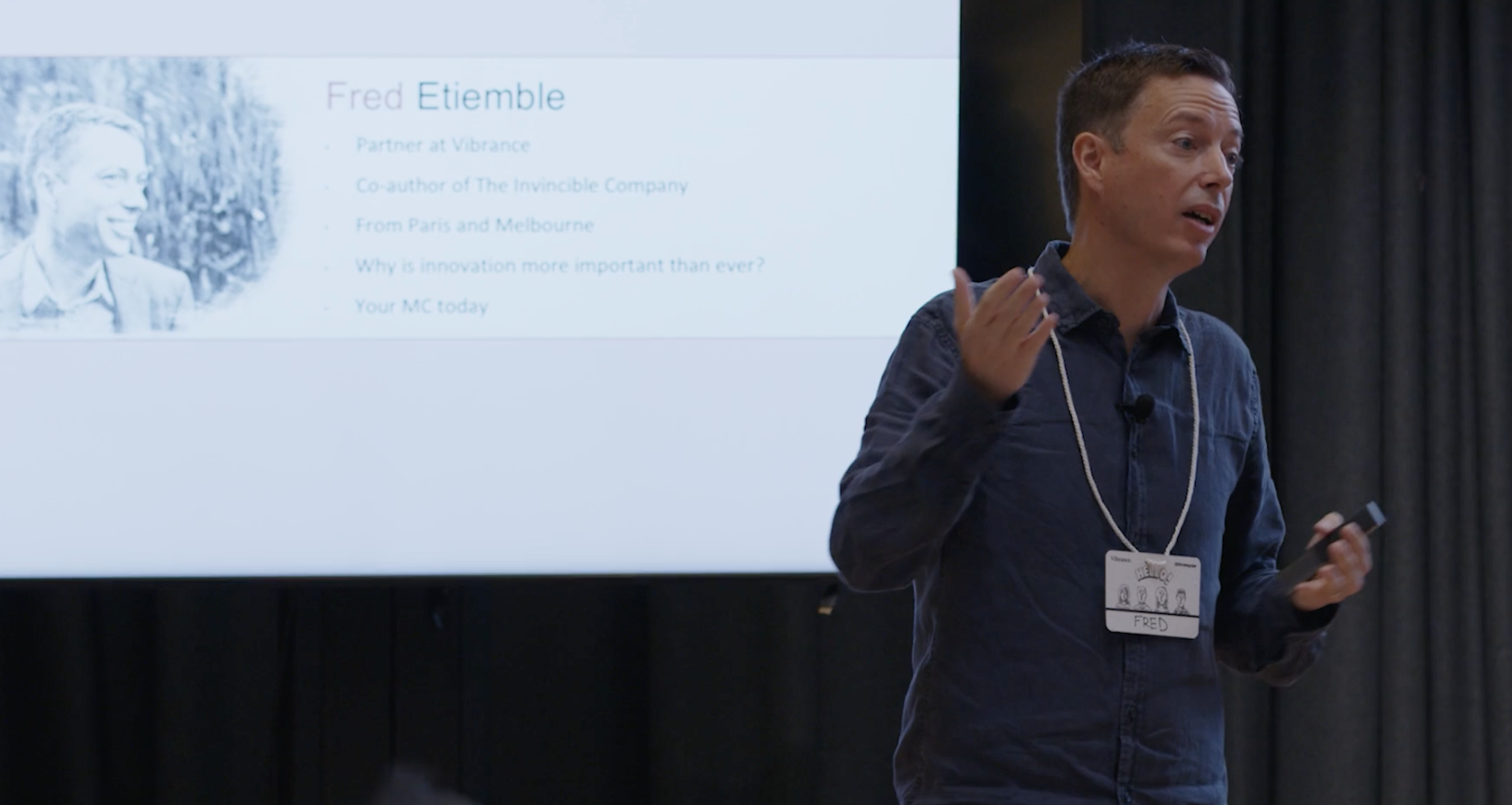
In my introduction to the Corporate Innovation in Action conference, l shared my experience on why large organisations innovate and my convictions on why innovation is more important than ever today.
You can watch the recording here.

In this post I reflect on the most useful books on strategy and innovation I read in 2022.
Below are the four books I referred the most to fellow practitioners, clients and friends.

A lack of awareness and readiness can seriously hinder the ability of corporate innovators and scale-up leaders to successfully scale their new venture in an incumbent business.
In this blogpost I highlight how leaders of scale-ups should get ready for and adapt to two major changes in the scaling phase:
Shifting their Business Model focus,
Rethinking the Operating Model.

The ability to go beyond an existing business model, to transcend current industry boundaries, or to connect to a higher purpose that we’ve seen in some organisations all started with a new vision. But this doesn’t happen that often.
In this blogpost I want to summarise key convictions on how to truly help business leaders free themselves from the daily grind and come up with positive visions for their companies.

When leaders turn for help on innovation, the last thing they want to hear is that transformative innovation’s time to impact is unpredictable and long. Still it is important to manage leaders’ expectations early on, if only to give transformative innovation the best chance of success.
Let me explain in this post what I believe all leaders should know about innovation’s time to impact and how to overcome the longer time to impact of transformative innovation.

In this post I reflect on the most useful books on strategy and innovation I read in 2021.
Below are the four books I referred the most to fellow practitioners, clients and friends.

If you plan to introduce or increase the volume on transformative innovation in your organisation, expect pushback to say the least. Still, some leaders manage to overcome all obstacles.
In this article I want to highlight three powerful drivers behind the success of leaders who managed to create a capability for transformative innovation within their organisation.
So what drives leaders to invest in transformative innovation?
Fear of disruption
Hunger for growth
Awareness of an unforeseeable future
 Frederic Etiemble
Executive Advisor on Strategy & Innovation. Co-author of The Invincible Company.